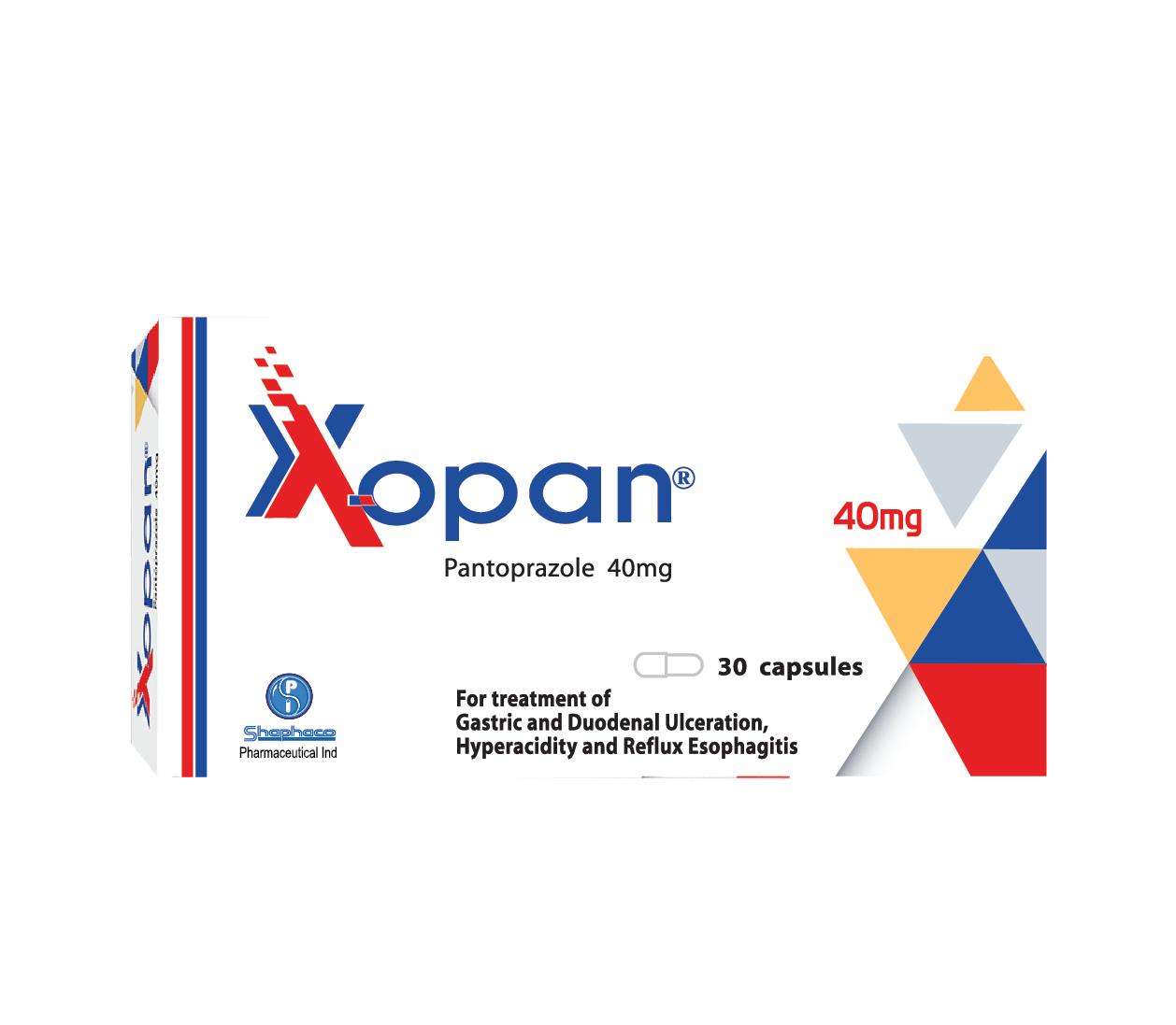

Comprehensive Clinical Monograph: Xopan 40mg (Pantoprazole Sodium)
1. Introduction and Overview
Xopan 40mg is a potent proton pump inhibitor (PPI) indicated for the short-term and long-term management of acid-related gastrointestinal disorders. Chemically identified as a substituted benzimidazole, Xopan functions by irreversibly inhibiting the H+/K+-ATPase enzyme system at the secretory surface of the gastric parietal cell.
In the clinical landscape, Xopan 40mg represents a cornerstone therapy for patients suffering from Gastroesophageal Reflux Disease (GERD), peptic ulcer disease, and hypersecretory conditions such as Zollinger-Ellison syndrome. This guide provides a rigorous pharmacological and clinical overview of the medication, intended for healthcare professionals and clinical specialists.
2. Technical Specifications and Mechanism of Action
Pharmacodynamics
Xopan 40mg acts as a "prodrug." Upon oral ingestion, the enteric-coated capsule passes through the stomach intact, preventing premature activation by gastric acid. Once absorbed into the systemic circulation and reaching the parietal cells of the stomach, the drug accumulates in the acidic secretory canaliculi. Here, it is protonated and converted into its active form, a cyclic sulfenamide.
This active form binds covalently to the H+/K+-ATPase (the "proton pump"), effectively shutting down the final step of acid production. Because the inhibition is irreversible, the parietal cell must synthesize new enzyme molecules to restore acid secretion, leading to a prolonged duration of action that persists even after the drug has been cleared from the plasma.
Pharmacokinetics
| Parameter | Description |
|---|---|
| Bioavailability | Approximately 77% |
| Protein Binding | ~98% (primarily albumin) |
| Metabolism | Hepatic (CYP2C19 and CYP3A4 pathways) |
| Half-life | ~1 to 2 hours |
| Excretion | 80% Renal, 20% Fecal |
3. Clinical Indications and Usage
Xopan 40mg is indicated for a spectrum of gastrointestinal pathologies where acid suppression is therapeutic:
- Erosive Esophagitis: Healing and maintenance of healing associated with GERD.
- Peptic Ulcer Disease: Treatment of active duodenal and gastric ulcers.
- Zollinger-Ellison Syndrome: Long-term management of pathological hypersecretory conditions.
- H. pylori Eradication: Used in combination with antibiotics (e.g., Clarithromycin and Amoxicillin) to reduce the risk of duodenal ulcer recurrence.
- Prophylaxis: Prevention of NSAID-induced gastric ulcers in high-risk patients.
Dosage Guidelines
- Erosive Esophagitis: 40mg once daily for 8 weeks. If healing does not occur, an additional 8 weeks may be considered.
- GERD Maintenance: 40mg once daily.
- Hypersecretory Conditions: Starting dose is typically 40mg twice daily; doses may be titrated up to 240mg per day based on gastric acid output measurements.
- Renal/Hepatic Impairment: No dosage adjustment is generally required for renal impairment. In severe hepatic impairment, the dosage should not exceed 20mg daily.
4. Risks, Side Effects, and Contraindications
Contraindications
- Hypersensitivity: Known hypersensitivity to Pantoprazole or any substituted benzimidazole.
- Concomitant Use: Should not be used with Rilpivirine-containing products due to potential reduction in Rilpivirine absorption.
Adverse Reactions
While generally well-tolerated, clinical data indicates the following potential side effects:
| System | Potential Side Effects |
|---|---|
| Gastrointestinal | Diarrhea, nausea, abdominal pain, flatulence, constipation. |
| Neurological | Headache, dizziness, vertigo. |
| Musculoskeletal | Arthralgia, myalgia, increased risk of bone fractures (long-term). |
| Infectious | Increased risk of Clostridioides difficile-associated diarrhea (CDAD). |
| Nutritional | Vitamin B12 deficiency, hypomagnesemia (with prolonged use). |
Drug Interactions
Xopan 40mg can significantly alter the gastric pH, which affects the bioavailability of drugs that are pH-dependent for absorption:
1. Antiretrovirals: Decreases concentrations of Atazanavir and Rilpivirine.
2. Warfarin: Potential for increased INR and prothrombin time; monitor closely.
3. Methotrexate: High-dose PPIs may increase serum levels of methotrexate.
4. Clopidogrel: Potential reduction in the antiplatelet effect of Clopidogrel due to CYP2C19 inhibition.
5. Special Populations
Pregnancy and Lactation
- Pregnancy: Category B. Animal studies have shown no evidence of impaired fertility or harm to the fetus. However, use only if clearly needed.
- Lactation: Pantoprazole is excreted in human milk. A decision should be made whether to discontinue nursing or discontinue the drug, taking into account the importance of the drug to the mother.
Geriatric Use
No dosage adjustment is necessary for elderly patients; however, prolonged use should be monitored to prevent the development of hypomagnesemia or B12 deficiency.
6. Overdose Management
There is no specific antidote for Xopan 40mg overdose. Because the drug is highly protein-bound, it is not readily dialyzable. In the event of an overdose:
1. Supportive Care: Monitor vital signs and clinical status.
2. Gastric Lavage/Activated Charcoal: May be considered if ingestion is recent.
3. Symptomatic Treatment: Address specific adverse effects as they arise.
7. Frequently Asked Questions (FAQ)
1. What is the optimal time to take Xopan 40mg?
It should be taken once daily, ideally 30 to 60 minutes before the first meal of the day to ensure maximum inhibition of the proton pumps when they are most active.
2. Can I crush or chew the capsule?
No. Xopan 40mg is enteric-coated to survive the acidic environment of the stomach. Crushing or chewing destroys this coating and renders the drug ineffective.
3. How long can I safely take Xopan 40mg?
Short-term use is typically 4–8 weeks. Long-term use should be under strict medical supervision due to risks like bone density loss and nutrient malabsorption.
4. Does Xopan interact with common painkillers like Ibuprofen?
Yes. While Xopan is often prescribed to protect the stomach from NSAIDs, it does not prevent all side effects. Always consult your physician when combining these medications.
5. Why did my doctor prescribe a B12 supplement with this?
Long-term PPI therapy can decrease the absorption of Vitamin B12. Supplementation is a common clinical preventive measure for patients on long-term therapy.
6. What should I do if I miss a dose?
Take the missed dose as soon as you remember. If it is nearly time for the next dose, skip the missed dose. Do not "double up" to make up for a missed dose.
7. Is Xopan 40mg addictive?
No, Xopan is not habit-forming. However, patients may experience "rebound acid hypersecretion" if the medication is stopped abruptly after long-term use.
8. Can Xopan cause weight gain?
Weight gain is not a standard side effect. If you experience unexpected weight changes while on this medication, consult your healthcare provider to rule out other underlying conditions.
9. Can I drink alcohol while taking this medication?
Alcohol can irritate the stomach lining and exacerbate the conditions for which Xopan is prescribed. It is generally advised to limit alcohol intake.
10. How do I know if the medication is working?
You should notice a reduction in heartburn, acid regurgitation, and epigastric pain. If symptoms persist after 8 weeks of consistent use, clinical reassessment is mandatory.
8. Clinical Conclusion
Xopan 40mg (Pantoprazole) remains a gold-standard therapeutic agent for acid-related disorders. Its efficacy in providing sustained acid suppression makes it an essential tool in gastroenterology. However, clinicians must balance this efficacy against the risks associated with chronic use, ensuring that the medication is prescribed at the lowest effective dose for the shortest duration necessary.
Patients should be educated on the importance of adherence, the potential for drug interactions, and the necessity of periodic clinical review to monitor for long-term adverse effects.
Disclaimer: This guide is for informational and educational purposes only and does not constitute medical advice. Always consult with a licensed healthcare professional or specialist before starting or changing any medication regimen.