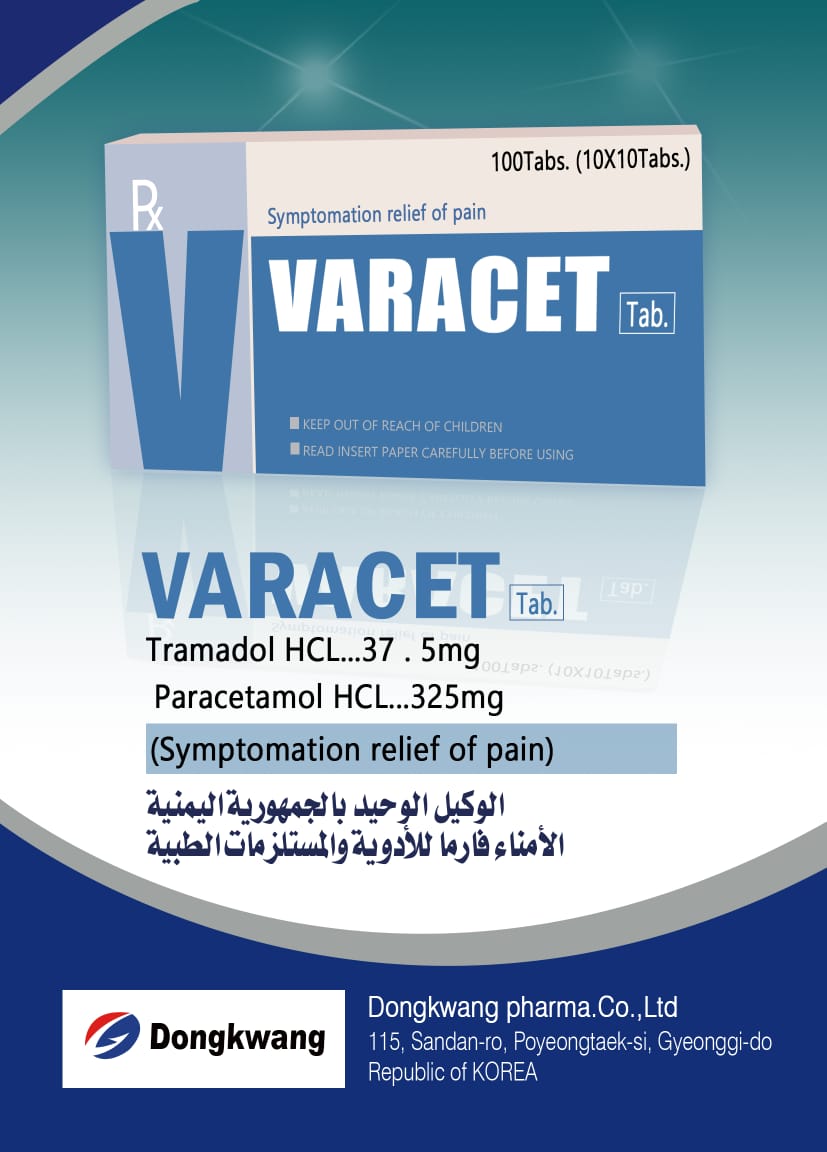
Comprehensive Clinical Guide: Varacet (Acetaminophen/Tramadol Hydrochloride)
1. Introduction and Overview
Varacet is a potent, fixed-dose combination analgesic medication primarily utilized in the management of moderate to moderately severe acute pain. By synergizing the rapid-onset, non-opioid analgesic properties of Acetaminophen with the centrally acting, opioid-receptor-modulating effects of Tramadol Hydrochloride, Varacet provides a multi-modal approach to pain control.
This medication is indicated for patients who require more robust analgesia than monotherapy with either agent can provide. As an expert clinical resource, this guide serves to delineate the pharmacodynamics, pharmacokinetic profile, and rigorous safety protocols required for the administration of Varacet in an orthopedic or primary care setting.
2. Deep-Dive: Mechanism of Action and Pharmacokinetics
The therapeutic efficacy of Varacet is derived from its dual-mechanism profile, which targets pain through both peripheral and central nervous system pathways.
Mechanism of Action
- Acetaminophen: Acts primarily as a central analgesic. While its exact mechanism remains subject to ongoing research, it is widely accepted that it inhibits prostaglandin synthesis in the central nervous system (CNS) and elevates the pain threshold. Unlike NSAIDs, it possesses negligible anti-inflammatory activity.
- Tramadol Hydrochloride: A centrally acting synthetic opioid analgesic. It functions through two distinct pathways:
- μ-opioid receptor agonism: Weak binding affinity to the μ-opioid receptor.
- Monoamine reuptake inhibition: Inhibition of the reuptake of norepinephrine and serotonin, which modulates the descending inhibitory pain pathways in the spinal cord.
Pharmacokinetics
| Parameter | Acetaminophen | Tramadol HCl |
|---|---|---|
| Absorption | Rapidly and almost completely absorbed. | Rapidly absorbed; bioavailability ~75%. |
| Metabolism | Hepatic (glucuronidation/sulfation). | Hepatic via CYP2D6 and CYP3A4. |
| Half-life | 2–3 hours. | 5–7 hours. |
| Excretion | Primarily renal. | Primarily renal (metabolites). |
3. Extensive Clinical Indications & Usage
Varacet is indicated for the short-term management (typically limited to 5 days or less) of moderate to moderately severe pain.
Clinical Applications:
- Post-Operative Orthopedic Care: Managing pain following arthroscopy, ligament reconstruction, or minor fracture reduction.
- Acute Musculoskeletal Trauma: Sprains, strains, and acute exacerbations of soft tissue injuries.
- Dental Procedures: Post-extraction pain management where non-opioid monotherapy is insufficient.
Dosage Guidelines
Dosage must be individualized based on the severity of pain and the patient’s clinical response.
* Adults (16+ years): The standard dose is 1 to 2 tablets every 4 to 6 hours as needed for pain, not to exceed 8 tablets per day.
* Pediatric/Geriatric: Use with extreme caution. Dose adjustments are mandatory for patients with renal impairment (creatinine clearance < 30 mL/min).
4. Risks, Side Effects, and Contraindications
Contraindications
- Hypersensitivity: Known allergy to Acetaminophen, Tramadol, or any excipients.
- Acute Intoxication: Patients currently under the influence of alcohol, hypnotics, centrally acting analgesics, or psychotropic drugs.
- MAO Inhibitors: Use within 14 days of MAO inhibitor therapy is strictly contraindicated due to the risk of serotonin syndrome.
- Severe Hepatic/Renal Impairment: Risk of toxicity due to altered metabolism.
Adverse Effects
| System | Common Side Effects |
|---|---|
| Gastrointestinal | Nausea, constipation, vomiting, dyspepsia. |
| Neurological | Dizziness, somnolence, headache, tremors. |
| Psychiatric | Anxiety, confusion, mood swings. |
| Dermatological | Pruritus, hyperhidrosis. |
Pregnancy and Lactation
- Pregnancy: Category C. Safety has not been established. Use only if the potential benefit outweighs the risk to the fetus. Chronic use may lead to neonatal opioid withdrawal syndrome.
- Lactation: Tramadol and its metabolites are excreted in breast milk. Use is not recommended during breastfeeding.
5. Drug Interactions
The clinical use of Varacet requires a thorough medication reconciliation to avoid dangerous interactions:
- Serotonergic Agents: SSRIs, SNRIs, and Triptans may increase the risk of Serotonin Syndrome.
- CNS Depressants: Alcohol, benzodiazepines, and other opioids may lead to profound sedation, respiratory depression, and coma.
- CYP2D6 Inhibitors: Drugs like Fluoxetine, Paroxetine, or Quinidine may inhibit the metabolism of Tramadol, leading to reduced efficacy.
- Warfarin: Regular monitoring of INR is required, as Tramadol may enhance the anticoagulant effect.
6. Overdose Management
An overdose of Varacet is a medical emergency due to the synergistic potential for hepatotoxicity (Acetaminophen) and respiratory depression/seizures (Tramadol).
- Primary Intervention: Secure the airway and establish assisted ventilation if necessary.
- Acetaminophen Toxicity: Administer N-acetylcysteine (NAC) as the specific antidote. Serum acetaminophen levels should be plotted on the Rumack-Matthew nomogram.
- Tramadol Toxicity: Naloxone may be administered to reverse respiratory depression; however, use with caution as it may precipitate seizures in patients with Tramadol-induced CNS excitability.
- Seizure Control: Benzodiazepines (e.g., Diazepam) should be used if the patient experiences seizures.
7. Frequently Asked Questions (FAQ)
Q1: How quickly does Varacet start working?
A: Patients generally report onset of analgesia within 30 to 60 minutes post-ingestion.
Q2: Can I consume alcohol while taking Varacet?
A: No. Alcohol significantly increases the risk of severe liver damage (due to the Acetaminophen component) and enhances the sedative effects of Tramadol, creating a dangerous risk of respiratory failure.
Q3: What should I do if I miss a dose?
A: Take the missed dose as soon as you remember. If it is nearly time for your next dose, skip the missed dose and resume your regular schedule. Never double the dose.
Q4: Is Varacet habit-forming?
A: Yes. Because it contains Tramadol, an opioid-like substance, there is a potential for physical and psychological dependence. It should be used strictly as prescribed.
Q5: Can Varacet cause seizures?
A: Yes, particularly when taken at dosages exceeding the recommended limit or in combination with other drugs that lower the seizure threshold.
Q6: Does Varacet affect my ability to drive?
A: Yes. Due to the potential for dizziness and somnolence, patients should avoid driving or operating heavy machinery until they know how the medication affects them.
Q7: How is Varacet different from standard Acetaminophen?
A: Standard Acetaminophen is a non-opioid antipyretic/analgesic. Varacet adds Tramadol, which provides a stronger, centrally-acting pain-relief mechanism suitable for more intense pain that standard OTC medication cannot manage.
Q8: Are there specific dietary restrictions?
A: No specific dietary restrictions exist, but it is recommended to take the medication with or without food. Avoid grapefruit juice, as it can interact with the metabolism of certain medications.
Q9: Can elderly patients take Varacet safely?
A: Elderly patients are more susceptible to the side effects of Tramadol, such as confusion and falls. Dosage should be lowered, and the patient should be monitored closely.
Q10: What is "Serotonin Syndrome"?
A: It is a potentially life-threatening condition caused by excess serotonin in the body. Symptoms include agitation, hallucinations, tachycardia, fever, and muscle rigidity. If these occur, seek immediate emergency medical attention.
8. Clinical Summary for Healthcare Providers
When prescribing Varacet, the clinician must prioritize the "Start Low, Go Slow" principle. Given the risk of hepatotoxicity from the Acetaminophen component and the opioid-related risks of Tramadol, providers should maintain a rigorous monitoring schedule. Always verify the patient’s total daily intake of Acetaminophen from all sources (including OTC cough/cold preparations) to ensure it does not exceed 3,000–4,000 mg in a 24-hour period to prevent acute liver failure.
Disclaimer: This guide is for educational purposes for healthcare professionals and does not replace professional medical judgment. Always consult the latest local pharmacological formulary and clinical guidelines.