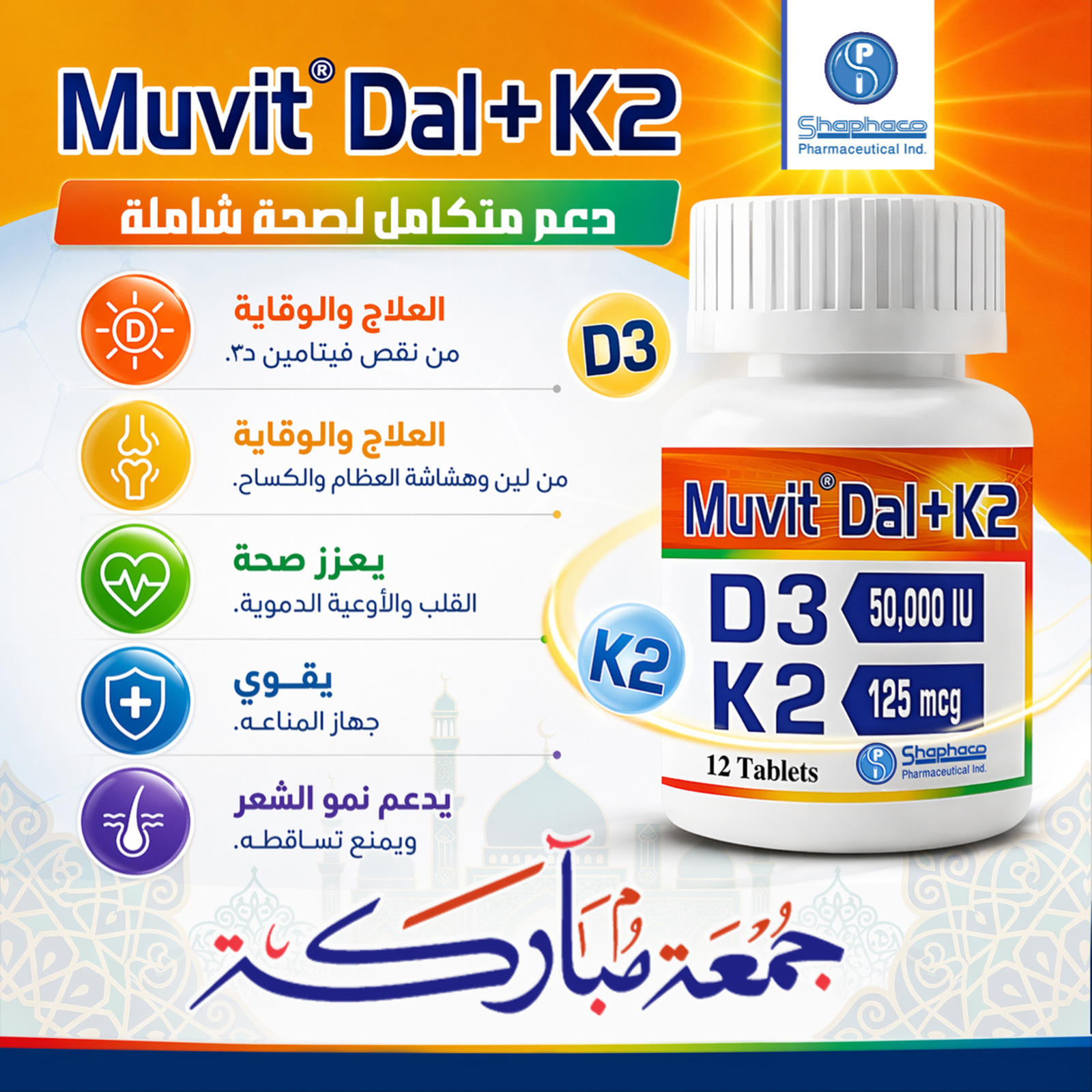
Comprehensive Clinical Guide: Muvit Dal + K2 (Diacerein, Glucosamine, and Vitamin K2-7)
1. Introduction and Therapeutic Overview
Muvit Dal + K2 represents a sophisticated, multi-modal pharmacological approach to the management of osteoarticular health. This fixed-dose combination (FDC) is specifically engineered to address the dual challenges of degenerative joint disease (osteoarthritis) and the associated metabolic requirements for bone mineral density maintenance.
By integrating Diacerein (a slow-acting, disease-modifying anti-osteoarthritic drug or SYSADOA), Glucosamine (a fundamental amino-monosaccharide), and Vitamin K2-7 (Menaquinone-7), this formulation acts on both the cartilaginous matrix and the underlying subchondral bone architecture. Unlike conventional non-steroidal anti-inflammatory drugs (NSAIDs) that merely mask symptoms, Muvit Dal + K2 seeks to provide structural support and modulate inflammatory pathways involved in cartilage degradation.
2. Deep-Dive: Mechanism of Action & Pharmacokinetics
To understand the efficacy of Muvit Dal + K2, one must analyze the synergistic actions of its three primary constituents.
A. Diacerein (The Cytokine Modulator)
- Mechanism: Diacerein is a prodrug that undergoes rapid conversion to rhein. Rhein exerts its effect by inhibiting the synthesis and activity of Interleukin-1 beta (IL-1β), a primary pro-inflammatory cytokine implicated in the degradation of chondrocytes and the synovial membrane. It also exhibits inhibitory effects on the expression of matrix metalloproteinases (MMPs), which are responsible for the breakdown of type II collagen.
- Pharmacokinetics: Following oral administration, Diacerein is converted to rhein. It shows high protein binding (approx. 99%) to albumin. It undergoes hepatic metabolism and is primarily excreted via the kidneys.
B. Glucosamine (The Matrix Precursor)
- Mechanism: Glucosamine is an endogenous amino sugar essential for the biosynthesis of glycosaminoglycans (GAGs) and proteoglycans, which are the building blocks of articular cartilage. By providing the essential substrates for cartilage repair, it assists in the maintenance of joint lubrication and shock absorption.
- Pharmacokinetics: Glucosamine is well-absorbed in the gastrointestinal tract. It is incorporated into the articular cartilage through systemic circulation, providing a sustained nutritional stimulus to chondrocytes.
C. Vitamin K2-7 (The Calcium Regulator)
- Mechanism: Vitamin K2-7 is essential for the activation of osteocalcin, a protein synthesized by osteoblasts that binds calcium to the bone matrix. Furthermore, it activates Matrix Gla Protein (MGP), which prevents the calcification of soft tissues and blood vessels.
- Pharmacokinetics: Menaquinone-7 has a longer half-life compared to other K-vitamins, allowing for more stable, once-daily therapeutic serum levels. It is lipophilic and requires dietary fat for optimal absorption.
3. Clinical Indications and Usage
Muvit Dal + K2 is indicated for patients exhibiting symptoms of joint degradation and those at risk of bone density loss.
| Indication | Clinical Rationale |
|---|---|
| Osteoarthritis (OA) | Reduction of pain and improvement in joint mobility in knee and hip OA. |
| Chondromalacia Patellae | Restoration of cartilage integrity in the patellofemoral joint. |
| Degenerative Joint Disease | Slowing the rate of cartilage erosion and secondary synovial inflammation. |
| Osteopenia/Bone Health | Prophylactic support for bone mineral density through calcium-regulatory activation. |
Dosage Guidelines
- Standard Adult Dosage: One tablet daily, preferably taken with a meal to enhance the absorption of Vitamin K2-7 and minimize the potential gastrointestinal irritation associated with Diacerein.
- Duration: As this is a slow-acting preparation, clinical benefits are typically observed after 2 to 4 weeks of continuous therapy. Long-term use (3–6 months) is often recommended to achieve significant structural modification.
4. Risks, Side Effects, and Contraindications
Potential Side Effects
While generally well-tolerated, the following reactions may occur:
* Gastrointestinal: Diarrhea, abdominal pain, and flatulence are the most common side effects, specifically associated with the Diacerein component.
* Dermatological: Rare instances of skin rash or pruritus.
* Hepatic: As with any systemic medication, periodic monitoring of liver enzymes is advised for long-term users.
Contraindications
- Hypersensitivity: Known allergy to glucosamine (often derived from shellfish), diacerein, or any component of the tablet.
- Inflammatory Bowel Disease: Patients with ulcerative colitis or Crohn’s disease should avoid Diacerein due to potential exacerbation of bowel motility.
- Anticoagulant Therapy: Patients on Vitamin K antagonists (e.g., Warfarin) must exercise extreme caution as Vitamin K2 can interfere with the anticoagulant effect.
Pregnancy and Lactation
- Pregnancy: Category C. Animal studies have shown potential risks; therefore, it should be used only if the potential benefit outweighs the risk to the fetus.
- Lactation: Use is generally discouraged as rhein can pass into breast milk.
5. Drug Interactions
| Drug Class | Interaction Effect | Clinical Management |
|---|---|---|
| Warfarin/Coumarins | Reduced anticoagulant efficacy. | Monitor INR closely; dose adjustment required. |
| Laxatives | Increased risk of diarrhea/dehydration. | Avoid concurrent usage. |
| Antibiotics (Tetracyclines) | Potential for altered absorption. | Separate administration by 2–4 hours. |
| Diuretics | Potential for electrolyte imbalance. | Monitor serum potassium and hydration. |
6. Overdose Management
In the event of an overdose:
1. Symptomatic Management: Focus on hydration to address potential diarrhea induced by Diacerein.
2. Gastrointestinal Decontamination: Activated charcoal may be considered if ingestion occurred within the last 1–2 hours.
3. Supportive Care: Monitor renal and hepatic function. There is no specific antidote for this combination; treatment remains supportive.
7. Massive FAQ Section
1. How long does it take for Muvit Dal + K2 to start working?
Unlike analgesics, this is a slow-acting medication. You should expect to see improvement in joint stiffness and pain after 4 weeks of consistent daily usage.
2. Can I take this if I have a shellfish allergy?
Most glucosamine is derived from shellfish. If you have a severe shellfish allergy, consult your physician, as synthetic or plant-based alternatives may be required.
3. Why does this medication cause diarrhea?
Diacerein increases the water content in the colon. To mitigate this, start with a half-dose or take the medication with a full meal.
4. Can this cure arthritis?
There is no "cure" for osteoarthritis. This medication is designed to manage symptoms and slow the progression of structural damage.
5. Do I need to take calcium supplements with this?
Vitamin K2-7 helps direct calcium to the bones, but it does not provide calcium itself. Your doctor may recommend a calcium supplement depending on your dietary intake.
6. Is it safe for long-term use?
Yes, it is indicated for long-term management, provided there are no contraindications and liver/renal function remains stable.
7. Can I take this with painkillers?
Yes, it is often used in combination with NSAIDs in the early stages of treatment to provide immediate pain relief while Muvit Dal + K2 works on the underlying pathology.
8. What happens if I miss a dose?
Take it as soon as you remember. If it is almost time for your next dose, skip the missed one. Do not double the dose.
9. Does it affect blood sugar?
While some older studies suggested glucosamine might affect insulin sensitivity, modern clinical data shows it is safe for most diabetic patients. However, monitor your blood glucose if you are on insulin.
10. Why is Vitamin K2 included?
Vitamin K2 acts as a "traffic controller" for calcium, ensuring it is deposited into the bone matrix rather than the arterial walls, which is crucial for patients with joint issues who are also at risk for vascular calcification.
8. Conclusion for Clinical Practitioners
Muvit Dal + K2 offers a comprehensive strategy for orthopedic clinicians. By addressing the tripartite needs of inflammation modulation (Diacerein), cartilage matrix support (Glucosamine), and bone mineral homeostasis (Vitamin K2-7), it provides a holistic approach that moves beyond simple symptom suppression. Practitioners should emphasize patient adherence and monitor for gastrointestinal side effects during the initial titration phase to ensure long-term treatment success.
Disclaimer: This guide is for educational purposes for healthcare professionals and patients. It does not replace the advice of a qualified medical practitioner. Always consult with a physician before initiating or modifying any medication regimen.