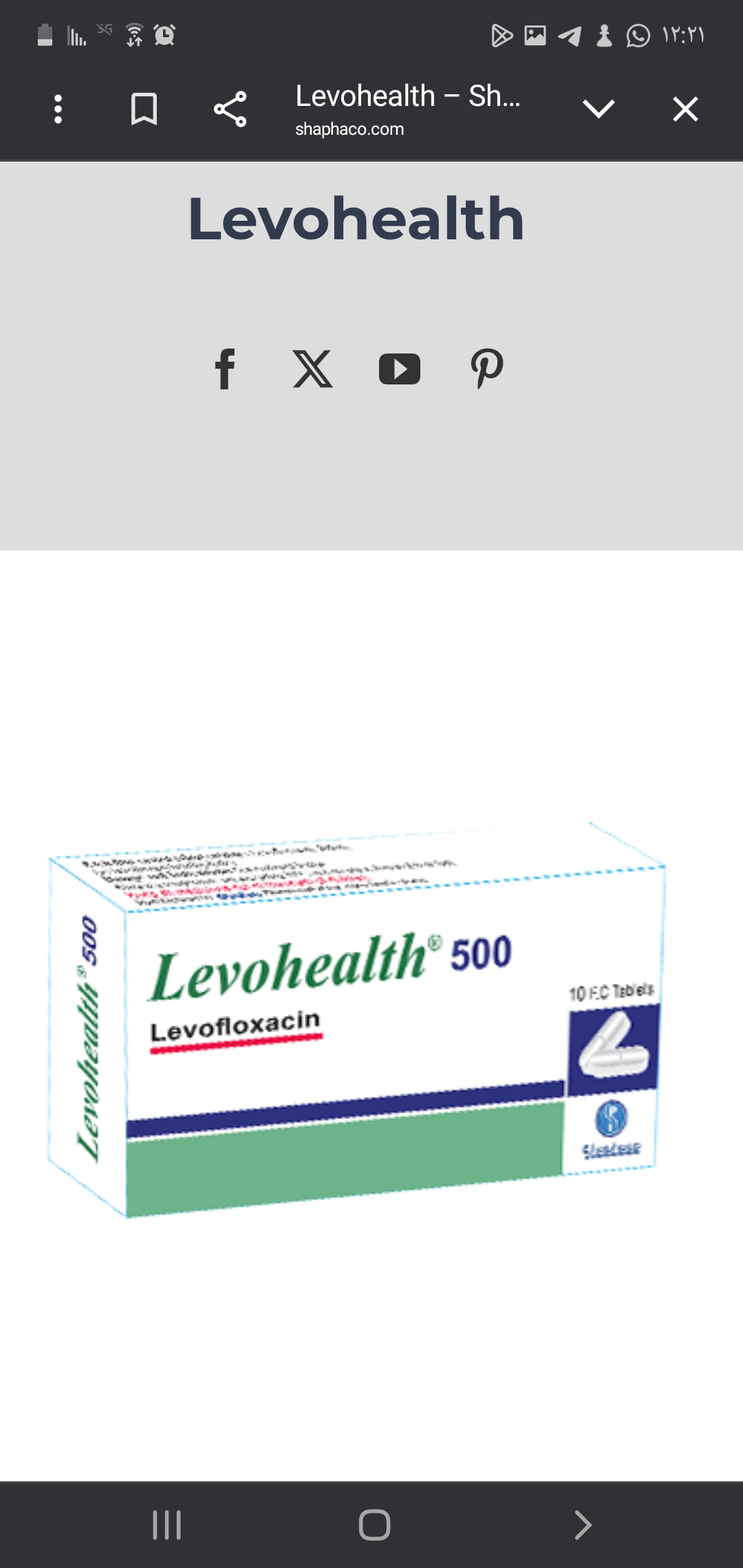
Comprehensive Medical Guide: Levohealth (Levofloxacin Formulation)
1. Introduction and Clinical Overview
Levohealth is a potent, third-generation fluoroquinolone antibiotic characterized by its broad-spectrum bactericidal activity. As a chiral fluorinated carboxyquinolone, Levohealth is the pure (-)-(S)-enantiomer of the racemic drug ofloxacin. Its clinical utility is defined by its superior potency against Gram-positive organisms, particularly Streptococcus pneumoniae, while maintaining robust efficacy against Gram-negative pathogens and atypical bacteria.
In the landscape of modern medicine, Levohealth serves as a cornerstone therapy for respiratory, urinary, and soft-tissue infections. Its high bioavailability—reaching nearly 99%—allows for seamless transition from intravenous (IV) to oral administration, facilitating expedited patient discharge and reduced healthcare costs.
2. Deep-Dive: Mechanism of Action and Pharmacokinetics
Mechanism of Action
Levohealth functions by inhibiting the bacterial enzymes DNA gyrase (topoisomerase II) and topoisomerase IV. These enzymes are critical for bacterial DNA replication, transcription, repair, and recombination.
- DNA Gyrase Inhibition: Prevents the supercoiling of bacterial DNA, which is essential for the replication process.
- Topoisomerase IV Inhibition: Prevents the separation of replicated chromosomal DNA into daughter cells during cell division.
By targeting these two distinct enzymes, Levohealth exerts a rapid, concentration-dependent bactericidal effect. The dual-target mechanism also contributes to a lower frequency of spontaneous resistance development compared to earlier fluoroquinolones.
Pharmacokinetics
The clinical success of Levohealth is largely attributed to its favorable pharmacokinetic profile:
| Parameter | Description |
|---|---|
| Bioavailability | ~99% (oral administration is equivalent to IV) |
| Protein Binding | 24% – 38% |
| Half-Life (t½) | 6 – 8 hours (prolonged in renal impairment) |
| Metabolism | Minimal hepatic metabolism |
| Excretion | Primarily renal (unchanged drug) |
| Volume of Distribution | Wide distribution into body tissues (lung, prostate, skin) |
3. Extensive Clinical Indications and Usage
Levohealth is indicated for the treatment of mild, moderate, and severe infections caused by susceptible strains of designated microorganisms.
Primary Indications:
- Community-Acquired Pneumonia (CAP): Including multi-drug resistant S. pneumoniae.
- Acute Bacterial Sinusitis: Indicated when other first-line therapies are contraindicated.
- Acute Bacterial Exacerbation of Chronic Bronchitis (ABECB).
- Complicated and Uncomplicated Urinary Tract Infections (UTIs): Including acute pyelonephritis.
- Chronic Bacterial Prostatitis.
- Skin and Skin Structure Infections: Both complicated (e.g., surgical site infections) and uncomplicated.
- Inhalational Anthrax (Post-Exposure): For prophylaxis and treatment.
- Plague: Including pneumonic and septicemic forms caused by Yersinia pestis.
Dosage Guidelines (General Adults)
| Condition | Dose | Duration |
|---|---|---|
| CAP | 750 mg daily | 5 days |
| Acute Sinusitis | 750 mg daily | 5 days |
| Complicated UTI | 250 mg daily | 10 days |
| Chronic Prostatitis | 500 mg daily | 28 days |
| Skin Infections | 750 mg daily | 7–14 days |
Note: Dosage adjustments are mandatory in patients with renal impairment (Creatinine Clearance < 50 mL/min).
4. Risks, Side Effects, and Contraindications
Black Box Warnings
The FDA mandates strict warnings regarding the use of fluoroquinolones, including Levohealth:
1. Tendonitis and Tendon Rupture: Risk is increased in patients >60 years, those taking corticosteroids, and transplant recipients.
2. Peripheral Neuropathy: May be permanent.
3. Central Nervous System (CNS) Effects: Including seizures, tremors, and psychiatric symptoms.
4. Exacerbation of Myasthenia Gravis: Use with extreme caution.
Common Side Effects
- Gastrointestinal: Nausea, diarrhea, constipation, dyspepsia.
- Neurological: Headache, dizziness, insomnia.
- Dermatological: Rash, pruritus.
Contraindications
- Known hypersensitivity to levofloxacin or other quinolones.
- History of myasthenia gravis.
- Patients with a history of QT interval prolongation.
Drug Interactions
- Antacids/Multivitamins: Cations (Mg2+, Al3+, Ca2+, Fe2+, Zn2+) significantly reduce Levohealth absorption. Administer 2 hours before or 2 hours after these agents.
- Warfarin: May potentiate the anticoagulant effect; monitor INR closely.
- NSAIDs: May increase the risk of CNS stimulation and seizures.
- Antidiabetic Agents: Potential for dysglycemia (hypoglycemia or hyperglycemia).
5. Pregnancy, Lactation, and Overdose Management
Pregnancy and Lactation
- Pregnancy: Classified as FDA Pregnancy Category C. Animal studies show potential for arthropathy in immature animals. Use only if the potential benefit justifies the potential risk to the fetus.
- Lactation: Levofloxacin is excreted in breast milk. Due to potential adverse effects on the infant’s cartilage, clinicians should advise either discontinuation of the drug or pumping and discarding milk during treatment.
Overdose Management
In the event of an acute overdose:
1. Empty the Stomach: Induce emesis or perform gastric lavage.
2. Monitor ECG: Watch for QT interval prolongation.
3. Supportive Care: Maintain adequate hydration and renal function.
4. Dialysis: Hemodialysis and peritoneal dialysis are not effective in removing levofloxacin from the body.
6. Frequently Asked Questions (FAQ)
1. Can Levohealth be taken with food?
Yes, Levohealth can be taken with or without food. However, it should be taken at least 2 hours before or after products containing iron, calcium, magnesium, or aluminum.
2. What should I do if I miss a dose?
Take the missed dose as soon as you remember. If it is almost time for your next dose, skip the missed dose and resume your regular schedule. Do not double the dose.
3. Why do I have to avoid intense exercise while on Levohealth?
Due to the risk of tendonitis and tendon rupture, patients are advised to avoid strenuous physical activity, particularly involving the Achilles tendon, during treatment and for several weeks post-treatment.
4. Does Levohealth treat viral infections like the flu?
No. Levohealth is an antibiotic and is ineffective against viral infections (e.g., common cold, influenza).
5. How long does it take for Levohealth to start working?
Most patients experience symptom relief within 48 to 72 hours, but it is critical to complete the full course of therapy to prevent antibiotic resistance.
6. Can Levohealth cause sun sensitivity?
Yes, moderate to severe photosensitivity reactions can occur. Patients should avoid excessive sunlight or UV light exposure during treatment.
7. Is it safe to consume alcohol while taking Levohealth?
While there is no direct chemical interaction, alcohol can exacerbate CNS side effects like dizziness and may impair the immune response needed to fight the infection.
8. What are the signs of a serious allergic reaction?
Seek emergency care if you experience hives, difficulty breathing, swelling of the face/throat, or a blistering skin rash.
9. Can I drive while taking this medication?
Levohealth can cause dizziness or lightheadedness. Do not drive or operate machinery until you know how the medication affects you.
10. Why is the dosage different for different infections?
The dosage is dictated by the site of infection, the severity of the illness, and the susceptibility profile of the suspected organism. Always follow the specific prescription provided by your physician.
7. Clinical Conclusion
Levohealth remains a vital tool in the orthopedic and clinical arsenal. By adhering to strict prescribing guidelines and monitoring for potential adverse events, clinicians can maximize the efficacy of this agent while minimizing patient risk. As with all fluoroquinolones, the "start low, go slow, and monitor" approach is recommended, particularly in the elderly or immunocompromised populations.
DISCLAIMER: This document is intended for educational and clinical reference purposes for medical professionals. It does not replace professional medical judgment, diagnosis, or treatment. Always consult the most recent FDA-approved package insert and local hospital antibiograms before prescribing.