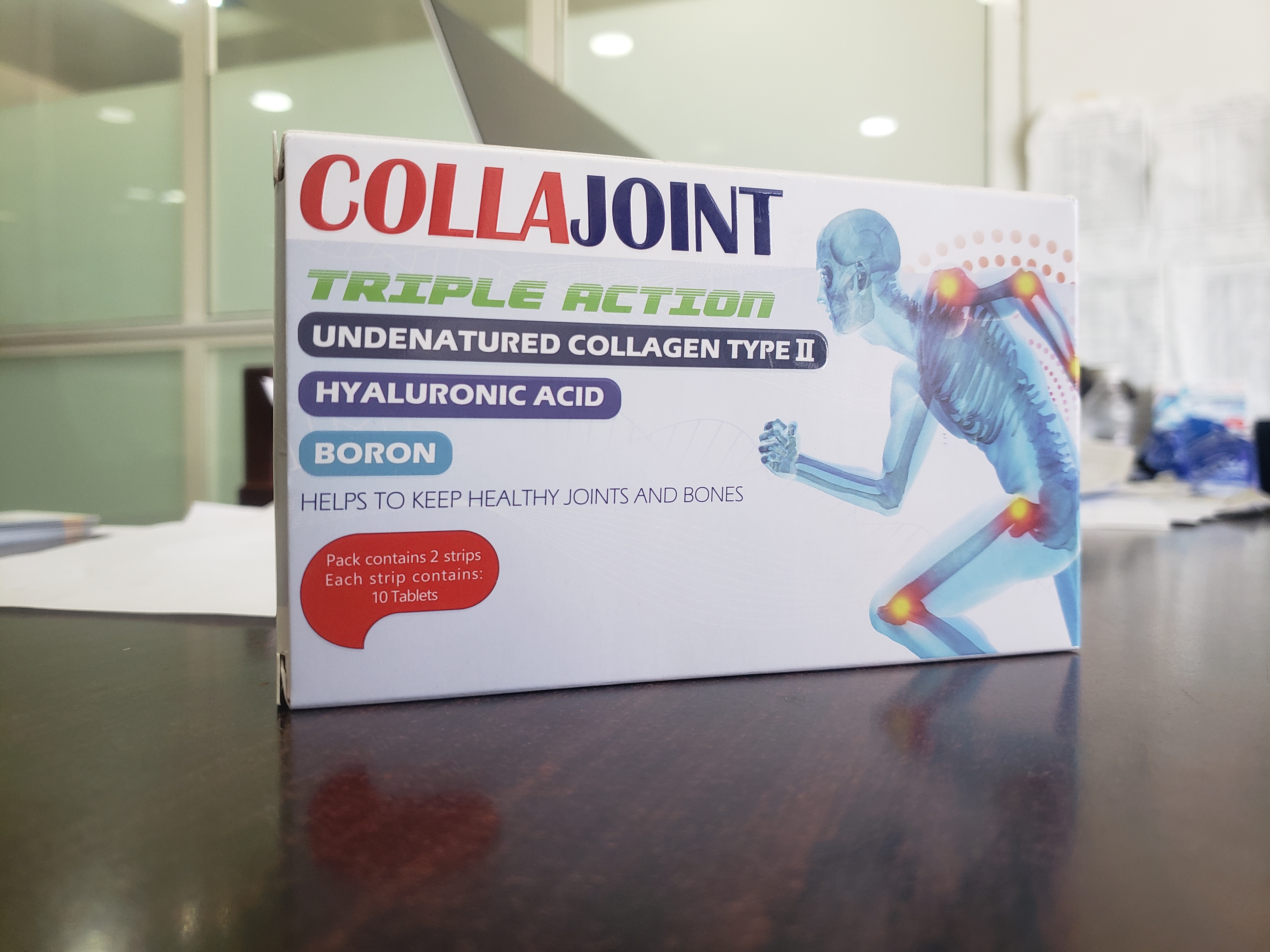
COLLAJOINT: Comprehensive Clinical Monograph and Practitioner’s Guide
1. Introduction and Overview
COLLAJOINT represents a sophisticated advancement in musculoskeletal pharmacotherapy, specifically engineered to address the degenerative pathology of articular cartilage and the associated inflammatory sequelae of osteoarthritis (OA) and chronic connective tissue degradation. Unlike conventional non-steroidal anti-inflammatory drugs (NSAIDs) which primarily target the cyclooxygenase (COX) enzyme pathways to provide symptomatic relief, COLLAJOINT functions as a disease-modifying agent, aiming to support the structural integrity of the extracellular matrix (ECM) while modulating the synovial microenvironment.
This therapeutic agent is composed of a synergistic blend of hydrolyzed bioactive collagen peptides, targeted glycosaminoglycans (GAGs), and specific micronutrient cofactors designed to stimulate chondrocyte biosynthesis. In clinical practice, COLLAJOINT is utilized as a cornerstone for long-term joint health management, particularly in patients exhibiting early-to-moderate stage osteoarthritis, ligamentous laxity, or post-operative orthopedic recovery requirements.
2. Technical Specifications and Mechanism of Action
2.1 Molecular Pharmacology
The efficacy of COLLAJOINT is predicated on its high bioavailability and the specific molecular weight profile of its collagen peptide components. Upon ingestion, these peptides undergo enzymatic hydrolysis in the gastrointestinal tract, resulting in di- and tri-peptides (notably hydroxyproline-proline and hydroxyproline-glycine) that act as signaling molecules.
- Chondrocyte Activation: The peptides are absorbed into the bloodstream and selectively accumulate in cartilaginous tissues. These fragments bind to fibroblast-like cells and chondrocytes, triggering the upregulation of type II collagen and aggrecan synthesis.
- ECM Stabilization: By increasing the concentration of endogenous collagen precursors, COLLAJOINT facilitates the repair of the collagen network within the hyaline cartilage, thereby increasing its compressive resistance.
- Anti-Catabolic Modulation: COLLAJOINT inhibits the expression of matrix metalloproteinases (MMPs), specifically MMP-13, which is the primary collagenase responsible for the degradation of cartilage in inflammatory joint states.
2.2 Pharmacokinetics
| Parameter | Description |
|---|---|
| Absorption | Rapid intestinal absorption via peptide transporters (PEPT1/PEPT2). |
| Bioavailability | High; plasma concentrations of hydroxyproline peak 1–2 hours post-administration. |
| Distribution | Selective affinity for joint connective tissues, synovium, and dermal layers. |
| Metabolism | Systemic hydrolysis into constituent amino acids. |
| Excretion | Renal clearance of non-incorporated metabolic byproducts. |
3. Clinical Indications and Usage
3.1 Primary Indications
COLLAJOINT is indicated for the following clinical presentations:
1. Osteoarthritis (OA): Management of pain and functional impairment associated with knee, hip, and spinal osteoarthritis.
2. Post-Traumatic Joint Recovery: Acceleration of connective tissue repair following ligamentous or meniscal injury.
3. Chronic Tendinopathy: Adjunctive support in the treatment of recalcitrant tendinosis.
4. Prophylactic Joint Preservation: Indicated for high-impact athletes or patients with a hereditary predisposition to joint degradation.
3.2 Dosage Guidelines
Dosing is determined by the severity of the clinical presentation and the patient’s metabolic status.
- Standard Maintenance: 10g daily (divided into two 5g doses or a single 10g dose) dissolved in 200ml of water or non-acidic beverage.
- Acute/Post-Operative Loading: 20g daily for the first 30 days, followed by a transition to standard maintenance.
- Administration Notes: For optimal absorption, COLLAJOINT should be administered on an empty stomach, at least 30 minutes prior to meals.
4. Risks, Side Effects, and Contraindications
4.1 Adverse Effects Profile
COLLAJOINT demonstrates a high safety profile. Most reported adverse events are gastrointestinal in nature and typically resolve with continuous usage.
- Gastrointestinal: Mild bloating, epigastric fullness, or altered bowel habits (rarely occurring).
- Allergic Reactions: As the collagen source is predominantly bovine or marine-derived, patients with known hypersensitivity to these sources must exercise caution.
4.2 Contraindications
- Renal Impairment: Patients with severe chronic kidney disease (CKD) should consult a nephrologist, as high-protein loading may exacerbate renal filtration stress.
- Active Malignancy: Not recommended for use during active chemotherapy or radiation therapy without oncologist approval.
- Known Hypersensitivity: Documented allergy to collagen peptide sources.
4.3 Drug Interactions
While COLLAJOINT is generally inert regarding drug-drug interactions, caution is advised when co-administering with:
1. Anticoagulants (Warfarin/Heparin): Monitor INR levels if the patient is on long-term anticoagulant therapy.
2. NSAIDs: While COLLAJOINT is often used with NSAIDs, the dose of the latter may be tapered as COLLAJOINT begins to exert its disease-modifying effects.
5. Pregnancy and Lactation
Data regarding the use of COLLAJOINT during pregnancy and lactation are currently limited. While collagen is a naturally occurring protein, the concentrated nature of the supplement necessitates a "Precautionary Principle" approach. It is not currently recommended for pregnant or breastfeeding women unless the clinical benefit clearly outweighs the potential, albeit theoretical, risk to the developing fetus/infant.
6. Overdose Management
Due to the nature of the components (peptides and amino acids), acute toxicity is highly improbable. In the event of an accidental ingestion of a large quantity:
* Clinical Assessment: Monitor for GI distress, including osmotic diarrhea.
* Management: Supportive care, hydration, and observation. No specific antidote or dialysis protocol is required.
7. Frequently Asked Questions (FAQ)
Q1: How long does it take to observe clinical results?
A: Clinical improvement in joint function is typically observed within 8 to 12 weeks of consistent daily usage. Structural changes in cartilage density may take up to 6 months of therapy.
Q2: Is COLLAJOINT a medication or a supplement?
A: While classified under regulatory frameworks as a dietary supplement or nutritional therapeutic, it functions as a pharmacological agent in clinical orthopedic settings due to its targeted bioactivity.
Q3: Can I take COLLAJOINT with my pain medication?
A: Yes. It is designed to be used as an adjunct to standard pharmacological management, including NSAIDs and analgesics.
Q4: Does the source of the collagen (bovine vs. marine) matter?
A: Both sources are effective. Marine collagen is often preferred for those with specific dietary restrictions (e.g., non-bovine consumers), while bovine collagen is often studied for its structural similarity to human type I and III collagen.
Q5: Will COLLAJOINT help with back pain?
A: If the back pain is related to facet joint osteoarthritis or degenerative disc disease, COLLAJOINT can assist in maintaining the hydration and structural integrity of the spinal connective tissues.
Q6: Are there any stimulants in this product?
A: No. COLLAJOINT is free of caffeine, ephedrine, or any central nervous system stimulants.
Q7: Can patients with diabetes take COLLAJOINT?
A: Yes. COLLAJOINT contains negligible amounts of carbohydrates and does not significantly impact blood glucose levels.
Q8: Should I cycle the product?
A: No. Chronic conditions like osteoarthritis require consistent long-term administration to maintain therapeutic levels in the synovial fluid.
Q9: What happens if I miss a dose?
A: Simply resume your regular dosing schedule the following day. Do not double the dose to make up for a missed serving.
Q10: Is it suitable for vegetarians?
A: Most standard COLLAJOINT formulations are not vegetarian, as they are derived from animal sources. Always check the specific packaging for source labeling.
8. Clinical Conclusion
COLLAJOINT represents a paradigm shift in the management of connective tissue pathology. By moving beyond mere symptom suppression and focusing on the biochemical replenishment of the extracellular matrix, it provides a robust therapeutic option for the modern orthopedic patient. Practitioners should prioritize adherence and patient education regarding the time-dependent nature of the therapy to ensure long-term clinical success.
Disclaimer: This guide is intended for medical professionals and clinical practitioners. It does not replace professional medical judgment. Always perform a thorough patient history and physical examination before initiating new therapeutic protocols.