Clinical Assessment & Protocol
Typical Presentation (HPI)
EN: Gradual increase in gingival size interfering with occlusion and hygiene. AR: زيادة تدريجية في حجم اللثة تعيق الإطباق والنظافة الفموية.
General Examination
EN: Unremarkable or not routinely indicated. AR: طبيعي أو غير مطلوب روتينياً.
Treatment Protocol
EN: Medication modification if possible and gingivectomy. AR: تعديل الدواء إذا أمكن، وإجراء استئصال اللثة.
Patient Education
EN: Rigorous oral hygiene maintenance is crucial to prevent recurrence. AR: الحفاظ على نظافة فموية صارمة أمر حيوي لمنع النكس.
Systemic & Specialized Examinations
EN: S1, S2 present. No murmurs. AR: صوتا القلب الأول والثاني طبيعيان. لا توجد نفخات.
EN: Lungs clear to auscultation. AR: الرئتان صافيتان عند التسمع.
EN: Abdomen soft, non-tender. AR: البطن لين ولا يوجد ألم.
EN: Alert, oriented x3. No focal deficits. AR: المريض واعي ومدرك. لا يوجد عجز عصبي بؤري.
EN: Unremarkable or not routinely indicated. AR: طبيعي أو غير مطلوب روتينياً.
EN: Unremarkable or not routinely indicated. AR: طبيعي أو غير مطلوب روتينياً.
EN: Unremarkable or not routinely indicated. AR: طبيعي أو غير مطلوب روتينياً.
EN: Unremarkable or not routinely indicated. AR: طبيعي أو غير مطلوب روتينياً.
EN: Generalized, firm, fibrotic enlargement of gingiva, especially in interdental papillae. AR: تضخم لثوي معمم وصلب وليفي، خاصة في الحليمات بين السنية.
Orthopedic & Trauma Assessments
EN: Unremarkable or not routinely indicated. AR: طبيعي أو غير مطلوب روتينياً.
EN: Unremarkable or not routinely indicated. AR: طبيعي أو غير مطلوب روتينياً.
1. Comprehensive Introduction & Overview
Drug-induced gingival hyperplasia (DIGH), also clinically referred to as drug-induced gingival overgrowth (DIGO), represents a significant iatrogenic oral pathology characterized by the abnormal proliferation of gingival connective tissue in response to the systemic administration of specific pharmacological agents. Unlike inflammatory gingival enlargement, which is primarily driven by plaque-induced biofilm accumulation, DIGH is a distinct clinical entity where the pharmacological agent acts as a primary catalyst for fibroblast activation and extracellular matrix (ECM) dysregulation.
The clinical profile of DIGH is marked by a firm, fibrous, and often nodular enlargement of the interdental papillae, which may progress to cover the anatomical crowns of the teeth if left untreated. This condition presents a multifaceted challenge for both medical and dental practitioners, as it necessitates a delicate balance between managing the underlying systemic disease (e.g., epilepsy, hypertension, or organ transplant rejection) and mitigating the debilitating oral effects of the prescribed medication.
2. Deep-Dive: Mechanisms and Pathophysiology
The pathophysiology of DIGH is multifactorial and remains a subject of intense investigation. While the exact molecular trigger varies by drug class, a unifying hypothesis points to the alteration of fibroblast homeostasis.
The Fibroblast Activation Model
At the cellular level, DIGH is characterized by an increased synthesis of collagenous and non-collagenous extracellular matrix proteins. The following mechanisms are implicated:
- Decreased Collagen Degradation: Several drugs inhibit the production of active matrix metalloproteinases (MMPs), specifically MMP-1, which is responsible for collagen breakdown.
- Fibroblast Phenotypic Heterogeneity: Not all gingival fibroblasts respond to these drugs equally. Subpopulations of fibroblasts (often described as "responder" cells) exhibit increased proliferation rates and heightened sensitivity to TGF-β1 (Transforming Growth Factor-beta 1).
- Ion Channel Modulation: In the case of calcium channel blockers (CCBs), the inhibition of calcium uptake by fibroblasts may interfere with the production of active collagenases, leading to an accumulation of connective tissue.
- Inflammatory Synergy: While DIGH is drug-induced, the presence of local irritants (plaque/calculus) exacerbates the condition. Inflammation acts as a secondary trigger, increasing vascular permeability and allowing higher concentrations of the drug to reach the gingival tissues.
Primary Drug Classes Implicated
The "Big Three" drug categories responsible for the vast majority of cases are:
| Drug Category | Examples | Primary Mechanism |
|---|---|---|
| Anticonvulsants | Phenytoin | Inhibition of folic acid uptake; fibroblast proliferation |
| Immunosuppressants | Cyclosporine A | Increased TGF-β1 expression; altered collagen turnover |
| Calcium Channel Blockers | Nifedipine, Amlodipine | Inhibition of cation transport; altered fibroblast homeostasis |
3. Clinical Staging and Grading
To provide a standardized framework for clinical assessment, the Bobbio/Ingle Grading Scale is frequently employed to document the severity of the overgrowth.
Clinical Staging Criteria
| Grade | Description |
|---|---|
| Grade 0 | No clinical evidence of gingival overgrowth. |
| Grade I | Overgrowth limited to the interdental papillae. |
| Grade II | Overgrowth involving the papillae and the marginal gingiva. |
| Grade III | Overgrowth covering three-quarters or more of the clinical crowns of the teeth. |
Standard Clinical Presentation
- Texture: Firm, resilient, and pale pink in the absence of secondary inflammation. If secondary plaque-induced inflammation is present, the tissue becomes erythematous, edematous, and prone to spontaneous bleeding.
- Distribution: Most prominent in the anterior maxilla and mandible.
- Functional Impact: Severe cases (Grade III) lead to malocclusion, difficulty in mastication, speech impairment, and significant aesthetic concerns, which often lead to social withdrawal in patients.
4. Differential Diagnosis
Distinguishing DIGH from other forms of gingival enlargement is critical for appropriate management.
- Plaque-Induced Gingival Enlargement: Primarily localized to the gingival margin; correlates directly with oral hygiene status.
- Hereditary Gingival Fibromatosis (HGF): A rare, genetic condition; usually presents as a slow-growing, diffuse, and generalized enlargement that often begins during the eruption of primary or permanent teeth.
- Leukemic Infiltration: Rapid onset, often accompanied by systemic symptoms (fever, malaise, lymphadenopathy).
- Hormonal Enlargement: Associated with puberty, pregnancy, or oral contraceptive use; typically presents as hypervascular and edematous tissue.
- Neoplastic Enlargement: Requires biopsy to rule out malignancy (e.g., squamous cell carcinoma or peripheral giant cell granuloma).
5. Diagnostic Protocols and Management Strategies
Key Diagnostic Tests
- Comprehensive Medical History: Crucial for identifying the offending agent.
- Periodontal Charting: To assess pocket depths (pseudopockets vs. true attachment loss).
- Radiographic Evaluation: To rule out bone loss (DIGH is a soft tissue condition; bone loss suggests concurrent periodontitis).
- Biopsy (Histopathology): Indicated if the enlargement is asymmetric, rapidly growing, or does not respond to standard therapy. Histology typically reveals hyperplastic epithelium and dense, collagenous connective tissue with minimal inflammatory infiltrate.
Management Roadmap
- Medical Consultation: Discuss the possibility of drug substitution or dosage reduction with the patient’s primary physician or specialist (e.g., cardiologist or neurologist).
- Rigorous Oral Hygiene: Implementation of professional plaque control and patient education.
- Phase I Therapy: Scaling and root planing to eliminate inflammatory components.
- Surgical Intervention: If conservative measures fail, gingivectomy or periodontal flap surgery is indicated to restore gingival architecture.
- Long-term Maintenance: Short-interval recall visits (every 3 months) are mandatory, as recurrence is common if the drug regimen remains unchanged.
6. Risks, Side Effects, and Contraindications
- Increased Caries Risk: The overgrowth creates retentive areas that are difficult to clean, leading to higher rates of root caries.
- Periodontal Attachment Loss: While DIGH is initially a soft tissue phenomenon, the accumulation of plaque in deep pseudopockets can lead to true periodontitis and subsequent bone loss.
- Contraindications for Surgery: Surgery should not be performed until the patient’s systemic condition is stable and the local inflammatory burden is minimized to prevent rapid recurrence.
7. Extensive FAQ Section
1. Can I stop taking my medication to cure the overgrowth?
You must never discontinue or alter a prescribed medication without consulting your prescribing physician. Doing so could result in life-threatening complications, such as seizures or organ rejection.
2. Is DIGH a sign of poor oral hygiene?
Not necessarily. While poor hygiene exacerbates the condition, DIGH is fundamentally caused by the medication's effect on cellular metabolism. Even patients with excellent hygiene can develop the condition.
3. Does the gingiva grow back after surgery?
Yes. Recurrence is very common if the patient continues taking the offending drug. Long-term maintenance is essential.
4. Are there any medications that don't cause this?
In many cases, physicians can switch to alternative classes of drugs (e.g., switching from Nifedipine to a different antihypertensive) that have a lower incidence of gingival overgrowth.
5. How long after starting a drug does overgrowth appear?
It varies, but clinical signs typically appear within 1 to 3 months of initiating the medication.
6. Can children develop drug-induced gingival overgrowth?
Yes, especially children on anticonvulsants for epilepsy management.
7. Is the overgrowth painful?
Uncomplicated DIGH is generally painless. However, if the tissue becomes inflamed or traumatized by biting, it can be quite painful.
8. Does the size of the enlargement correlate with the drug dose?
There is a complex relationship between dosage and severity, but it is not strictly linear. Individual patient susceptibility plays a significant role.
9. What is the difference between a "pseudopocket" and a "true pocket"?
A pseudopocket occurs when the gingiva grows coronally (upward) without the underlying bone being destroyed. A true pocket involves the loss of clinical attachment to the tooth root.
10. Can folic acid supplements help?
Some studies suggest that systemic or topical folic acid may help reduce the severity of phenytoin-induced gingival overgrowth, though clinical evidence remains mixed and it should only be used under medical supervision.
8. Long-Term Prognosis
The long-term prognosis for patients with DIGH is generally favorable, provided there is a collaborative relationship between the physician and the dental provider. While the condition is rarely life-threatening, it significantly impacts the quality of life. Success is defined not by the permanent elimination of the tissue (as the pharmacological trigger remains), but by the successful management of the overgrowth to allow for adequate oral function, aesthetics, and the prevention of secondary periodontal destruction.
Clinicians must prioritize patient education, as the burden of maintenance falls heavily on the patient’s ability to perform meticulous daily plaque removal. With consistent professional intervention and potential pharmacological adjustments, most patients can successfully manage the condition throughout their lifetime.
Disclaimer: This guide is intended for educational and professional clinical reference only. It does not replace the necessity for individual clinical judgment or consultation with a patient's primary healthcare provider. Always perform a thorough review of systems before initiating any periodontal intervention.
Related Clinical Integration
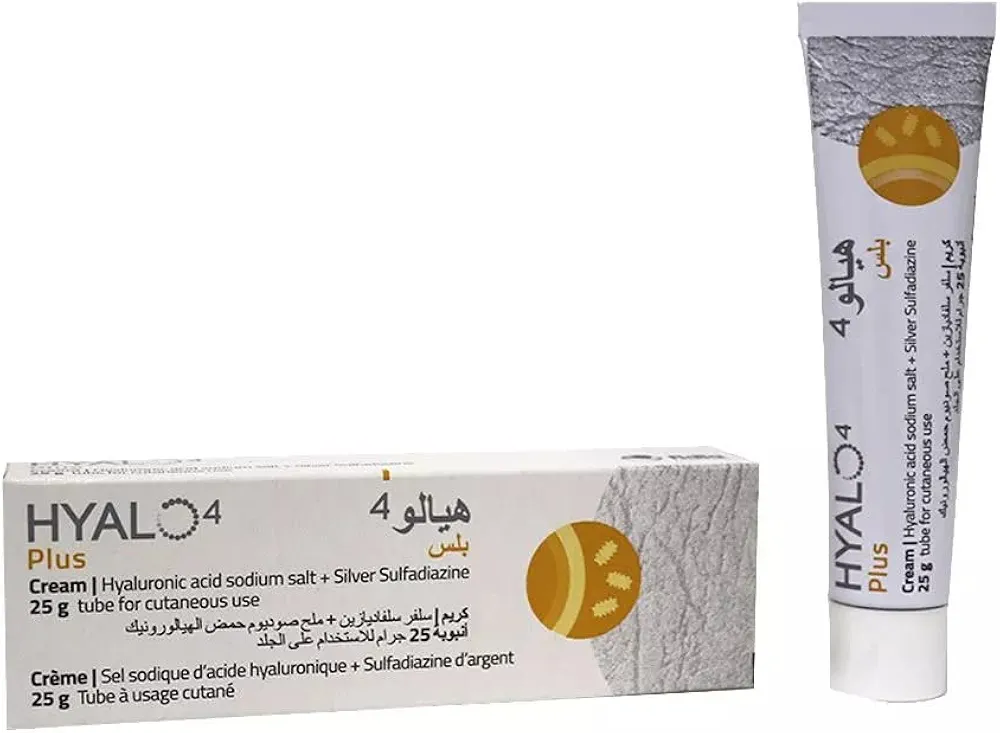
In the management of drug-induced gingival hyperplasia, clinical focus often shifts toward the adjunctive care of associated mucosal lesions or post-procedural wound healing following a gingivectomy. While the primary intervention involves medication review and rigorous oral hygiene, clinicians may utilize Hyalo4 plus cream / هيالو 4 بلس كريم 0.2% / 1% to support tissue regeneration and manage secondary inflammation in the periodontal tissues. Integrating Hyalo4 plus cream / هيالو 4 بلس كريم 0.2% / 1% into the postoperative care protocol facilitates optimal healing of the gingival architecture, thereby improving patient comfort and clinical outcomes during the recovery phase of surgical excision.