Clinical Assessment & Protocol
Typical Presentation (HPI)
EN: Scaling, crusting, and induration of the lower lip. AR: تقشر، تشكل قشور، وتصلب في الشفة السفلية.
General Examination
EN: Loss of definition of the vermilion border. AR: فقدان التحديد في حدود الشفة القرمزية.
Treatment Protocol
EN: Topical 5-fluorouracil, laser ablation, or vermilionectomy. AR: استخدام 5-فلورويوراسيل الموضعي، الاستئصال بالليزر، أو استئصال الشفة القرمزية.
Patient Education
EN: Strict sun protection and regular biopsy of suspicious areas. AR: حماية صارمة من الشمس وأخذ خزعات بانتظام من المناطق المشبوهة.
Systemic & Specialized Examinations
EN: S1, S2 present. No murmurs. AR: صوتا القلب الأول والثاني طبيعيان. لا توجد نفخات.
EN: Lungs clear to auscultation. AR: الرئتان صافيتان عند التسمع.
EN: Abdomen soft, non-tender. AR: البطن لين ولا يوجد ألم.
EN: Alert, oriented x3. No focal deficits. AR: المريض واعي ومدرك. لا يوجد عجز عصبي بؤري.
EN: Unremarkable or not routinely indicated. AR: طبيعي أو غير مطلوب روتينياً.
EN: Unremarkable or not routinely indicated. AR: طبيعي أو غير مطلوب روتينياً.
EN: Unremarkable or not routinely indicated. AR: طبيعي أو غير مطلوب روتينياً.
EN: Unremarkable or not routinely indicated. AR: طبيعي أو غير مطلوب روتينياً.
EN: Unremarkable or not routinely indicated. AR: طبيعي أو غير مطلوب روتينياً.
Orthopedic & Trauma Assessments
EN: Unremarkable or not routinely indicated. AR: طبيعي أو غير مطلوب روتينياً.
EN: Unremarkable or not routinely indicated. AR: طبيعي أو غير مطلوب روتينياً.
Clinical Comprehensive Guide: Actinic Cheilitis (AC)
1. Introduction and Clinical Overview
Actinic Cheilitis (AC)—often colloquially referred to as "farmer’s lip" or "sailor’s lip"—is a potentially malignant, inflammatory condition of the vermilion border of the lips, primarily induced by chronic, cumulative exposure to ultraviolet (UV) radiation. As a clinical entity, AC is considered the lip equivalent of actinic keratosis (AK) found on the skin.
From an orthopedic and clinical dermatology perspective, it is critical to classify AC as a premalignant lesion. If left untreated, the epithelial dysplasia associated with AC can progress to squamous cell carcinoma (SCC) of the lip. Because the vermilion is a transition zone between the oral mucosa and the cutaneous skin, it lacks the protective stratum corneum thickness and melanocytic density of typical skin, making it uniquely susceptible to photodamage.
2. Etiology and Pathophysiology
The Mechanism of Photodamage
The primary driver of Actinic Cheilitis is chronic exposure to UVB (290–320 nm) and UVA (320–400 nm) radiation. UV radiation induces DNA damage, specifically the formation of cyclobutane pyrimidine dimers (CPDs) and 6-4 photoproducts. When the DNA repair mechanisms (e.g., nucleotide excision repair) are overwhelmed by chronic insult, mutations occur in tumor suppressor genes, most notably the TP53 gene.
Risk Factors
- Ultraviolet Radiation: Cumulative sun exposure is the primary culprit.
- Fitzpatrick Skin Type: Individuals with Type I and II skin (fair skin, blue eyes, propensity to burn) are at the highest risk.
- Geographic Location: Populations living in high-altitude environments or near the equator.
- Occupational Exposure: Farmers, construction workers, fishermen, and outdoor athletes.
- Tobacco Use: Smoking and chewing tobacco act as synergistic carcinogens, exacerbating the inflammatory response.
- Immunosuppression: Patients on long-term immunosuppressive therapy (e.g., organ transplant recipients) show significantly higher rates of progression to invasive carcinoma.
3. Clinical Staging and Grading
AC is typically categorized by the severity of the epithelial changes. Clinicians often use the following descriptive grading system:
| Grade | Clinical Characteristics | Histopathological Correlation |
|---|---|---|
| Mild | Subtle atrophy, blurring of the vermilion border, dryness. | Basal cell hyperplasia, mild dysplasia. |
| Moderate | Focal thickening, persistent scaling, white patches (leukoplakia). | Moderate epithelial dysplasia. |
| Severe | Erosions, ulcerations, crusting, induration, fissuring. | Severe dysplasia or carcinoma in situ. |
4. Clinical Presentation and Diagnostic Evaluation
Standard Presentation
Patients typically present with persistent dryness and "chapping" that fails to respond to standard lip balms. The lower lip is affected in approximately 90% of cases due to its anatomical prominence and direct exposure to overhead solar radiation.
- Symptoms: Burning sensation, stinging, pruritus, and a "sandpaper" texture on the lips.
- Signs:
- Atrophy: Thinning of the vermilion tissue.
- Leukoplakia: Irregular white, plaque-like areas.
- Erythema: Persistent redness.
- Fissuring: Vertical cracks that may bleed or crust.
Diagnostic Protocol
Diagnosis is primarily clinical; however, confirmation requires histopathology.
- Dermoscopy: A non-invasive diagnostic tool that reveals "strawberry pattern" vascularity and white scales.
- Incisional Biopsy: The gold standard. A punch or scalpel biopsy must be performed if the lesion is indurated, ulcerated, or fails to heal after 3–4 weeks of topical intervention.
- Histopathology Findings:
- Hyperkeratosis and parakeratosis.
- Solar elastosis (accumulation of basophilic elastic fibers in the dermis).
- Epithelial dysplasia (nuclear pleomorphism, loss of polarity).
5. Differential Diagnosis
It is imperative to distinguish AC from other conditions that mimic its appearance.
- Chronic Chapped Lips (Cheilitis Simplex): Usually responds to hydration and lip protection.
- Contact Cheilitis: An allergic reaction to lipsticks, toothpaste, or flavoring agents.
- Lichen Planus: Characterized by Wickham striae (lacy white lines).
- Discoid Lupus Erythematosus: Often presents with more erythematous, plaque-like lesions with central atrophy.
- Squamous Cell Carcinoma: Must be ruled out if there is persistent ulceration or a palpable mass.
6. Treatment Modalities
The goal of treatment is the total ablation of the dysplastic epithelium.
Topical Therapies (Field Cancerization Treatment)
- 5-Fluorouracil (5-FU): A chemotherapeutic agent that selectively destroys rapidly dividing dysplastic cells.
- Imiquimod: An immune response modifier that stimulates the local immune system to recognize and destroy atypical cells.
- Diclofenac Sodium: A non-steroidal anti-inflammatory drug (NSAID) used for milder cases to reduce inflammation and promote epithelial turnover.
Surgical/Physical Procedures
- Cryotherapy: Application of liquid nitrogen to destroy the superficial layers.
- Laser Ablation: CO2 or Erbium:YAG lasers are highly effective for precise removal of the vermilion.
- Vermilionectomy (Lip Shave): Surgical excision of the affected vermilion, usually reserved for severe, treatment-resistant cases.
7. Prognosis and Long-Term Management
The prognosis for AC is generally excellent if detected early. However, because the underlying cause (UV exposure) is often persistent, recurrence is common.
Management Strategy:
1. Sun Protection: Mandatory daily use of SPF 30+ lip-specific sunscreens.
2. Physical Barriers: Wide-brimmed hats and protective clothing.
3. Regular Monitoring: Patients should be screened every 6–12 months. Any area that becomes nodular or ulcerated requires an immediate biopsy to rule out malignant transformation.
8. Frequently Asked Questions (FAQ)
1. Is Actinic Cheilitis the same as a cold sore?
No. Cold sores (Herpes Labialis) are viral infections characterized by fluid-filled blisters that heal on their own within 1-2 weeks. AC is a precancerous condition caused by sun damage and does not resolve without treatment.
2. Can I use regular lip balm to treat AC?
Lip balm may soothe the symptoms of dryness, but it does not treat the underlying cellular dysplasia. It is a supportive measure, not a curative one.
3. How do I know if my AC has turned into cancer?
Warning signs of progression to SCC include the development of a persistent, non-healing ulcer, a growing lump, or bleeding that occurs without trauma. These require urgent medical evaluation.
4. Is Actinic Cheilitis contagious?
No. It is a non-infectious, environmentally induced condition. You cannot pass it to others.
5. Why is it mostly on the lower lip?
The lower lip is anatomically positioned to receive more direct solar radiation than the upper lip, which is partially shielded by the nose and the natural protrusion of the upper lip.
6. Are there specific vitamins that help?
While a healthy diet is generally good for skin health, there is no clinical evidence that oral vitamins can cure AC or reverse established dysplasia.
7. How long does the treatment take?
Topical treatments like 5-FU or Imiquimod typically require a course of 2 to 4 weeks. Surgical treatments provide immediate removal of the lesion, though healing takes 7–14 days.
8. Does smoking make AC worse?
Yes. Tobacco smoke contains carcinogens that promote the progression of dysplastic cells to invasive cancer. Quitting smoking is strongly advised for all patients with AC.
9. Can I wear lipstick if I have AC?
It is generally recommended to avoid heavily fragranced or chemical-laden lipsticks during active treatment, as the skin is compromised and more susceptible to contact dermatitis.
10. Will the lip look normal after treatment?
Yes. Modern treatments like laser ablation or cryotherapy are designed to preserve the cosmetic appearance of the lip while removing the damaged surface layers.
9. Conclusion for Clinical Practitioners
Actinic Cheilitis represents a significant clinical marker for cumulative UV damage. As clinicians, we must move beyond treating the symptoms of dryness and focus on the proactive management of epithelial dysplasia. By utilizing a combination of patient education (sun avoidance), early biopsy for suspicious lesions, and modern ablative techniques, we can effectively prevent the progression of this condition to invasive squamous cell carcinoma, thereby significantly improving patient outcomes and long-term quality of life.
Disclaimer: This guide is intended for educational purposes for healthcare professionals and students. It does not replace professional clinical judgment or institutional protocols. Always consult current clinical guidelines before initiating patient treatment.
Related Clinical Integration
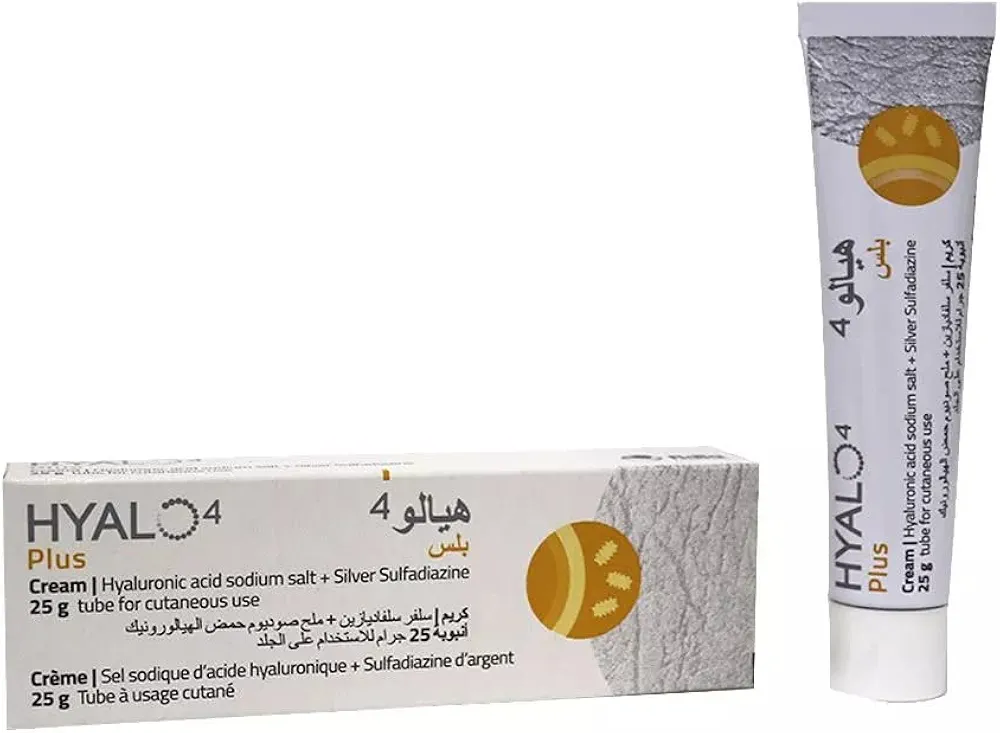
In the management of Actinic Cheilitis, clinical intervention often necessitates a dual approach focusing on both secondary infection control and tissue regeneration. When patients present with fissuring, crusting, or suspected bacterial superinfection, the application of Fusidic Acid Ointment / مرهم حمض الفوسيديك 2% is indicated to address staphylococcal colonization and promote a sterile healing environment. Following the stabilization of the lesion, or in cases where mucosal integrity is severely compromised, Hyalo4 plus cream / هيالو 4 بلس كريم 0.2% / 1% is utilized to leverage the synergistic effects of hyaluronic acid and silver sulfadiazine, which collectively accelerate epithelial repair and provide essential antimicrobial protection during the recovery phase.